


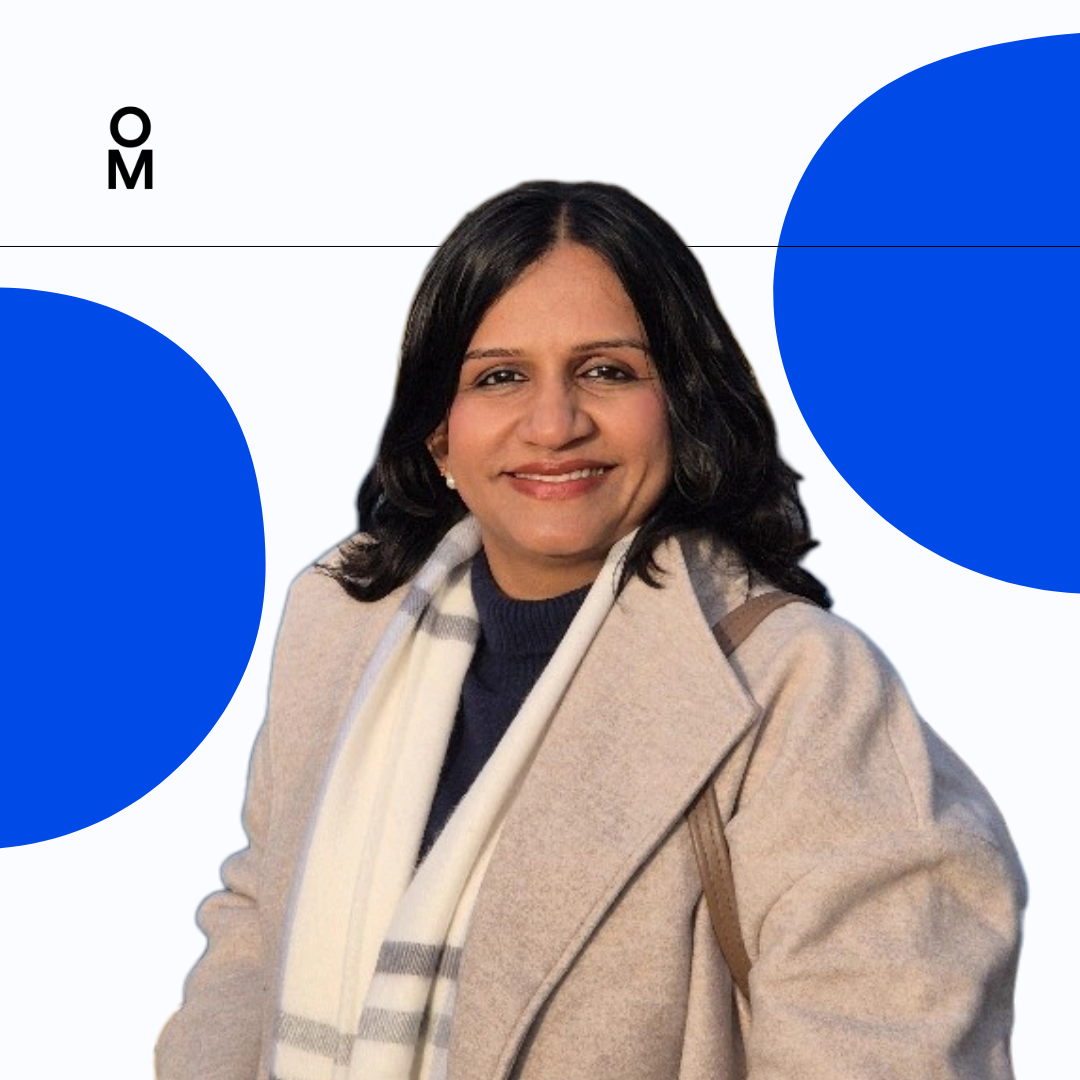
Twenty years back, I was an Electronics and Communication Engineering graduate who spoke the language of microprocessors. Today, I lead teams at Salesforce.
The path between those two points wasn't a straight line – it was a series of intentional pivots, steep learning curves, and life-changing mentorships. Here is what two decades in the technology world taught me about growth.
When I started at Wipro, I had to rebuild my toolkit from scratch: Java, HTML, XML, and Databases. This wasn't just about syntax; it was about learning how to think like a software engineer. My time at McAfee deepened this, moving me into the critical world of desktop and web security.
Joining EMC was my "big break." I was part of an integration team working on a high-stakes acquisition. Over six years, I didn't just stay in one lane; I rotated through Automation & Performance Engineering, Scrum Leadership, Product Integration & Customer Configurations. This "T-shaped" growth – having deep expertise in one area while understanding the breadth of the product lifecycle – is what eventually paved the way for management.
I’ve always believed that technical competence is your foundation, and self-awareness is your ceiling. Being selected for the RISE program (a women-specific leadership initiative at EMC) was a game-changer. It introduced me to a cohort of 20+ ambitious women and forced me to reflect on my unique strengths. Later, a hand-picked customer communication training refined my "Executive Presence." We were assessed and trained on: vocal presence, body language, and the ability to explain complex technical depth with clarity.
After a rewarding stint at Dell, I joined Salesforce in 2025. Transitioning into leadership over the last five years has been the most rewarding part of my journey so far. I’ve moved from solving coding problems to solving people problems, helping my teams navigate the same complexities I faced as a fresh graduate.
It’s not just about software engineering. In any field, having good mentors is a big part of your journey. In the first half of my career, I didn’t have a mentor. I feel I could have done much better if I had one. A mentor gives you different perspectives and helps shape your thoughts. So, irrespective of the field, a mentor is very important.
Since I didn’t have one initially, I try to fill that gap now by mentoring others, especially students, girls, and women professionals. Some of the development programmes I attended were eye-openers. They helped me understand the importance of having a bigger picture. We often restrict ourselves to our work, but having a different perspective is what helps you grow further, especially after mid-career.
When it comes to software engineering, people outside might think it’s only about coding. Yes, that’s a major part, but there is also integration, requirements analysis, and customer-driven integrations. With agile, the customer is king. A good understanding of the problem you are trying to solve, and the usability of your solution, makes a big difference.
Many women are ambitious, but we tend to underestimate ourselves. We think we’re not ready yet and need more training or expertise. Limiting ourselves can slow the growth and reduce the opportunities. We need not know everything while taking up a role. A lot of skills can be learnt on the job. As we embrace growth, we will get more opportunities to make important decisions, thereby helping us become better leaders.
Another factor is that you are often in rooms filled with the majority of men. To make your voice heard, you need to put in extra effort. I’d say that a woman may need to put in 50–60% more effort than a man. You need to be prepared with data, read the room, and have a valid opinion to present. Then, you will be heard.

Your competence is what takes you forward, irrespective of the area you are in. In my industry, the core competence is technical expertise; I’ve always tried to shift domains. When I started with Wipro, I worked in networking and virtualisation. Then I moved to McAfee, focusing on security; then to CRM, Storage, Servers, Cloud, and now I’m with AI-driven CRM at Salesforce. I’ve always experimented with technology and domains. Some lessons from one area can help you in another. People often say you should specialise in one domain, but as you grow, you should have exposure to diverse domains and technologies.
The second skill is risk-taking, especially calculated risks. It’s important to know which risks you can take and which areas you can venture into where you can succeed.
From a leadership perspective, empathy is an essential skill. From my first leadership role till now, I have had mentors who helped me understand how things work, how I can evolve, how to be more empathetic, and how I can put myself in my team’s shoes to understand their problems so that I can solve them.
Being an enabler is also very important. The biggest shift for me when I moved into leadership was that I had to talk for my team – the transition from I to WE. What my team achieves and delivers is my success. And this is where the enabling role comes in. I must unblock, support, prepare, coach, mentor, and guide the team. The shift from doing to enabling has been a big learning for me in leadership.
I’ll start with an example. My current role with Salesforce happened because of one of my colleagues and a longtime friend. We started our careers together at Wipro, and we have been in touch since then. He moved to Salesforce, and when a role came up, he thought of me. I was not actively exploring external opportunities at that time – it just happened. Many people asked me how I managed the switch when the job market was so tough. It shows how strong our connection has been.
I also do a lot of external mentoring and community volunteering. Most of my speaking and mentoring opportunities have come through my connections. Apart from a few big conferences, where you go through a Call for Proposals, most of my speaking opportunities have come from people who know me and have seen my work.
These things are very enabling and rewarding. People are noticing what I do, and they have formed an opinion about me; the way I interact with people makes them feel connected. They are ready to give me opportunities, and I try to do the same for others. I act as an enabler and pass on opportunities that come my way.
It’s all about how you connect with people and build your brand. Your brand is not just on LinkedIn. The online brand helps, but the alignment between online and offline brands matters. Being authentic and genuine with your brand is very important. People should feel that the person they see online is the same when they meet me face-to-face.
I would like to share one saying I’ve heard from multiple leaders, which I strongly believe in - “You have not come this far to only come this far.”
There is still a long way to go, so don’t stop where you are – keep going. I believe that I can be a better version of myself every year, or even every day. This is a question I keep asking myself: ‘How can I be a better version of myself?’ It’s important not to get lost in comparing your journey with others. Compare yourself to who you were yesterday, check who you are today, and work on who you want to be tomorrow.
Who I am becoming is very important. Am I proud of that person? Am I happy with who I am becoming? That self-reflection is something I would ask everyone to do regularly.





.png)


.png)


